What Is SEO? 10 Essential Facts Every Beginner Should Know
What is SEO? Search Engine Optimization (SEO) is the process of improving a website so that it appears higher in search engine results like Google, Bing, and Yahoo. Instead of relying only on paid advertisements, SEO helps websites attract organic (unpaid) traffic by making their content more relevant, valuable, and user-friendly.
Whether you run a small business, an e-commerce store, or a large company, understanding what is SEO is essential for building a strong online presence. Every day, millions of people search for products, services, and information online. SEO helps your website become one of the results they find, increasing visibility, credibility, and opportunities to grow.
Before learning what is SEO, it’s helpful to understand why digital marketing is important for every business and how SEO supports an overall digital marketing strategy.
In this beginner’s guide, you’ll learn how SEO works, why it’s important, the different types of SEO, common myths, and practical tips to improve your website’s performance in search results.
What Is SEO?
SEO stands for Search Engine Optimization. It involves optimizing your website so that search engines can easily understand its content and show it to users searching for relevant information.
For example, if someone searches for “best digital marketing agency in Kannur,” Google analyzes thousands of websites and ranks the most relevant and trustworthy pages. Websites that follow SEO best practices have a better chance of appearing higher in these search results.
SEO is not about tricking search engines. Instead, it’s about creating high-quality content, improving website performance, and providing a better experience for visitors.
Some of the key goals of SEO include:
- Improving website visibility
- Increasing organic traffic
- Enhancing user experience
- Building trust and authority
- Generating quality leads and conversions
Unlike paid advertising, SEO delivers long-term benefits. Once your website gains authority, it can continue attracting visitors without paying for every click.
Why Is SEO Important?
SEO has become one of the most valuable digital marketing strategies because it connects businesses with people who are actively searching for their products or services.
Here are some of the biggest benefits of SEO:
Businesses looking to improve their online visibility can also explore the benefits of hiring a digital marketing agency for small business to create a strong long-term marketing strategy.
Increases Organic Traffic
People trust search engines to provide the best answers. Ranking on the first page of Google allows your website to receive more visitors without paying for advertisements.
Builds Trust and Credibility
Users generally trust websites that appear higher in search results. Consistently ranking well can improve your brand’s reputation and authority in your industry.
Improves User Experience
Modern SEO focuses on delivering a better user experience by improving:
- Website speed
- Mobile responsiveness
- Easy navigation
- Helpful content
- Secure browsing (HTTPS)
These improvements benefit both search engines and website visitors.
Supports Long-Term Business Growth
Unlike paid campaigns that stop generating traffic when your budget ends, SEO continues delivering value over time through consistent organic visibility.
Generates High-Quality Leads
SEO targets users who are already interested in your products or services. This often leads to higher-quality traffic and better conversion opportunities.
How Search Engines Work
Understanding what is SEO becomes much easier when you know how search engines find and rank websites.
Search engines like Google follow three main steps before displaying results.
To learn more about how Google discovers, indexes, and ranks web pages, visit Google Search Central.
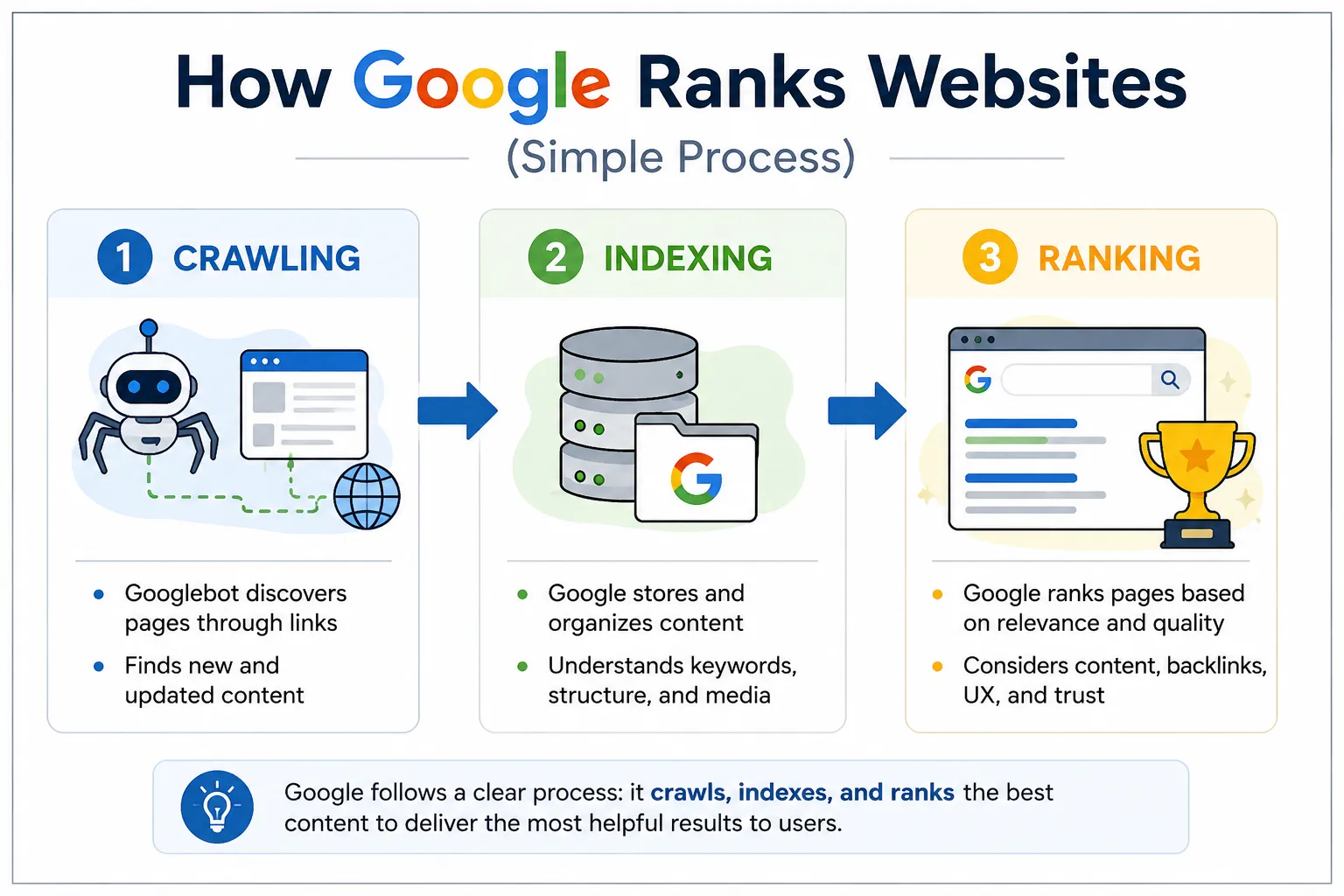
Crawling
Crawling is the process where search engine bots, often called spiders, discover new and updated web pages by following links across the internet.
If your website is properly structured, search engines can easily find your content.
Indexing
After crawling, search engines analyze your content and store it in their database, known as the index.
During indexing, Google evaluates factors such as:
- Page content
- Images
- Headings
- Keywords
- Internal links
- Structured data
Only indexed pages can appear in search results.
Ranking
When someone performs a search, Google compares millions of indexed pages and determines which ones best answer the user’s query.
Ranking depends on several factors, including:
- Content relevance
- Website authority
- User experience
- Page speed
- Mobile friendliness
- Quality backlinks
- Search intent satisfaction
The better your website meets these criteria, the higher it can rank in search results.
Understanding how a digital marketing campaign works helps you see how SEO fits into a complete digital marketing strategy.
Why Is SEO Important?
SEO has become one of the most valuable digital marketing strategies because it connects businesses with people who are actively searching for their products or services.
Here are some of the biggest benefits of SEO:
Increases Organic Traffic
People trust search engines to provide the best answers. Ranking on the first page of Google allows your website to receive more visitors without paying for advertisements.
Builds Trust and Credibility
Users generally trust websites that appear higher in search results. Consistently ranking well can improve your brand’s reputation and authority in your industry.
Improves User Experience
Modern SEO focuses on delivering a better user experience by improving:
- Website speed
- Mobile responsiveness
- Easy navigation
- Helpful content
- Secure browsing (HTTPS)
These improvements benefit both search engines and website visitors.
Supports Long-Term Business Growth
Unlike paid campaigns that stop generating traffic when your budget ends, SEO continues delivering value over time through consistent organic visibility.
Generates High-Quality Leads
SEO targets users who are already interested in your products or services. This often leads to higher-quality traffic and better conversion opportunities.
Types of SEO
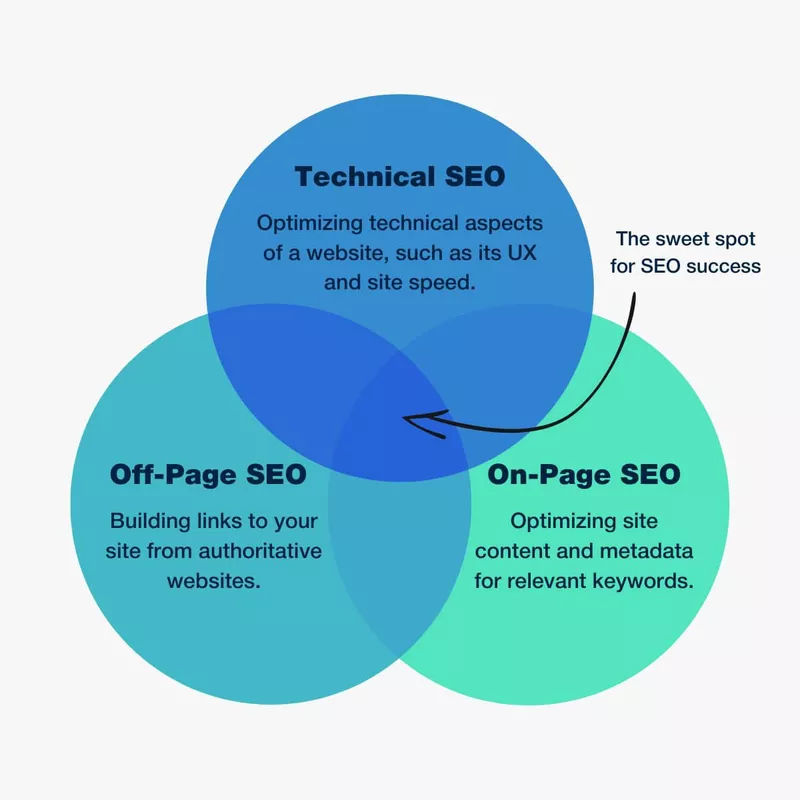
SEO consists of several important areas, each contributing to your website’s overall performance.
On-Page SEO
On-page SEO focuses on optimizing elements within your website.
Examples include:
- Keyword optimization
- High-quality content
- Title tags
- Meta descriptions
- Header tags (H1, H2, H3)
- Internal linking
- Image optimization
- URL structure
These elements help search engines understand your content more effectively.
Off-Page SEO
Off-page SEO involves activities performed outside your website that improve its authority and credibility.
Examples include:
- Quality backlinks
- Brand mentions
- Guest blogging
- Social media visibility
- Online citations
Strong backlinks from trusted websites signal to search engines that your content is valuable.
Technical SEO
Technical SEO ensures that your website is easy for search engines to crawl, index, and understand.
It includes:
- Fast loading speed
- Mobile optimization
- XML sitemap
- Robots.txt
- HTTPS security
- Structured data
- Core Web Vitals
- Fixing broken links
A technically optimized website improves both search engine performance and user experience.
How SEO Helps Businesses Grow
Understanding what is SEO is only the first step. The real value of SEO lies in how it helps businesses attract the right audience, build trust, and achieve long-term growth. Whether you’re a startup, a local business, or a large enterprise, SEO can become one of your most valuable digital marketing investments.
Drives Targeted Organic Traffic
SEO helps bring visitors who are already searching for what you offer. Instead of interrupting people with ads, SEO connects your website with users who have genuine interest in your products or services.
For example, someone searching for “best running shoes for beginners” is much more likely to purchase than someone who sees a random advertisement. This targeted traffic often results in better engagement and conversions.
Increases Brand Awareness
Even if users don’t click your website immediately, appearing consistently in search results helps people recognize your brand. Over time, repeated visibility builds familiarity and trust, making users more likely to choose your business when they are ready to buy.
Improves Lead Generation
A well-optimized website attracts visitors who are actively looking for solutions. This means SEO can generate qualified leads without relying entirely on paid advertising.
Supports Better Conversion Rates
SEO isn’t just about attracting visitors—it’s also about providing a better user experience. Fast-loading pages, clear navigation, mobile-friendly design, and helpful content encourage visitors to stay longer and take action, whether that’s making a purchase, filling out a contact form, or requesting a quote.
Delivers Long-Term Results
Unlike paid ads, where traffic stops when your budget runs out, SEO can continue generating organic traffic for months or even years with regular updates and quality content. This makes SEO one of the most cost-effective digital marketing strategies.
Common SEO Myths
Many beginners misunderstand what is SEO, leading to unrealistic expectations or ineffective strategies. Let’s clear up some common misconceptions.
SEO Delivers Instant Results
SEO is a long-term strategy. While some improvements may be visible within a few weeks, meaningful growth often takes several months depending on competition, website quality, and industry.
SEO Is Only About Keywords
Keywords are important, but modern SEO focuses on creating valuable content, improving user experience, earning quality backlinks, and satisfying search intent.
SEO Is a One-Time Task
Search engines constantly update their algorithms, and competitors continue improving their websites. SEO requires ongoing optimization, fresh content, technical maintenance, and performance monitoring.
More Keywords Mean Better Rankings
Keyword stuffing can actually harm your rankings. Instead, use your focus keyword naturally while creating helpful, readable content that answers users’ questions.
SEO Is Only for Large Businesses
Businesses of all sizes can benefit from SEO. Small and local businesses often compete successfully by targeting relevant local keywords and providing high-quality content.
Beginner SEO Best Practices
If you’re just starting to learn what is SEO, following these best practices will help you build a strong foundation.
Focus on High-Quality Content
Create original, informative, and helpful content that answers users’ questions. Search engines prioritize content that provides genuine value.
Research Relevant Keywords
Use keyword research tools to identify the words and phrases your audience is searching for. Include these keywords naturally throughout your content.
Website owners can monitor indexing status, search performance, and keyword visibility using Google Search Console.
Optimize Title Tags and Meta Descriptions
Write compelling titles and descriptions that accurately describe your content while encouraging users to click on your page.
Improve Website Speed
A fast-loading website improves user experience and supports better search rankings. Compress images, reduce unnecessary scripts, and use reliable hosting to improve performance.
Make Your Website Mobile-Friendly
Since most users browse on mobile devices, responsive website design is essential. A mobile-friendly website also supports better SEO performance.
Use Internal Links
Internal links help visitors discover related content while allowing search engines to understand your website’s structure.
For example, if you’re learning what is SEO, you may also find our guide on how a digital marketing campaign works useful for understanding the complete digital marketing process.
Link to Trusted External Resources
Referencing reliable sources improves credibility and provides readers with additional learning opportunities.
Conclusion
What is SEO? It’s the process of optimizing a website so that search engines can better understand its content and show it to users searching for relevant information.
SEO combines quality content, technical optimization, keyword research, user experience, and authority-building to improve organic visibility. Although SEO takes time, it delivers long-term benefits by increasing website traffic, building trust, generating leads, and supporting sustainable business growth.
Whether you’re launching your first website or improving an existing one, understanding the fundamentals of SEO is an important step toward achieving better online visibility and long-term success.
If you’re looking to improve your online presence and implement effective SEO strategies, partnering with the best digital marketing agency in Kannur can help you build a stronger digital foundation and achieve your business goals.
Frequently Asked Questions (FAQs)
1.What is SEO in simple words?
SEO (Search Engine Optimization) is the process of improving a website so it appears higher in search engine results and attracts more organic visitors.
2. Why is SEO important?
SEO helps increase website visibility, attract targeted traffic, build credibility, and generate long-term business growth without relying solely on paid advertising.
3. How long does SEO take to show results?
SEO is a long-term strategy. Depending on your website and competition, noticeable improvements can take anywhere from three to six months or longer.
4. What are the main types of SEO?
The three main types are:
- On-Page SEO
- Off-Page SEO
- Technical SEO
Each plays an important role in improving search engine rankings.
5. Can beginners learn SEO?
Yes. Anyone can learn SEO by understanding the basics, practicing consistently, creating helpful content, and staying updated with search engine best practices.
6. Is SEO better than paid advertising?
SEO and paid advertising serve different purposes. SEO focuses on long-term organic growth, while paid advertising delivers immediate visibility. Many businesses achieve the best results by using both strategies together.