7 Smart Ways to Choose the Right Digital Marketing Channels for Your Business
Choosing the right digital marketing channels is one of the most important decisions a business can make. With so many platforms and strategies available, it’s easy to feel overwhelmed or invest time and money in channels that don’t deliver the expected results.
Every business is different. A local service provider may benefit more from local SEO and Google Business Profile optimization, while an e-commerce store might achieve better results through Google Ads and social media advertising. The right combination depends on your business goals, target audience, budget, industry, and customer journey.
Instead of trying to be active on every platform, businesses should focus on the channels that are most likely to reach their ideal customers and generate measurable results. A strategic approach not only improves marketing performance but also helps make better use of available resources.
Learning how to choose the right digital marketing channels helps businesses avoid unnecessary marketing costs and focus on strategies that deliver measurable results.
In this guide, you’ll learn how to choose the right digital marketing channels using seven practical strategies that can help your business grow more effectively.
What Are Digital Marketing Channels?
Digital marketing channels are the online platforms and methods businesses use to connect with their target audience, promote products or services, and achieve specific marketing goals.
Each channel serves a different purpose. Some channels help build brand awareness, while others generate leads, increase website traffic, or drive sales. Understanding how each channel works allows businesses to create a balanced marketing strategy instead of relying on a single source of traffic.
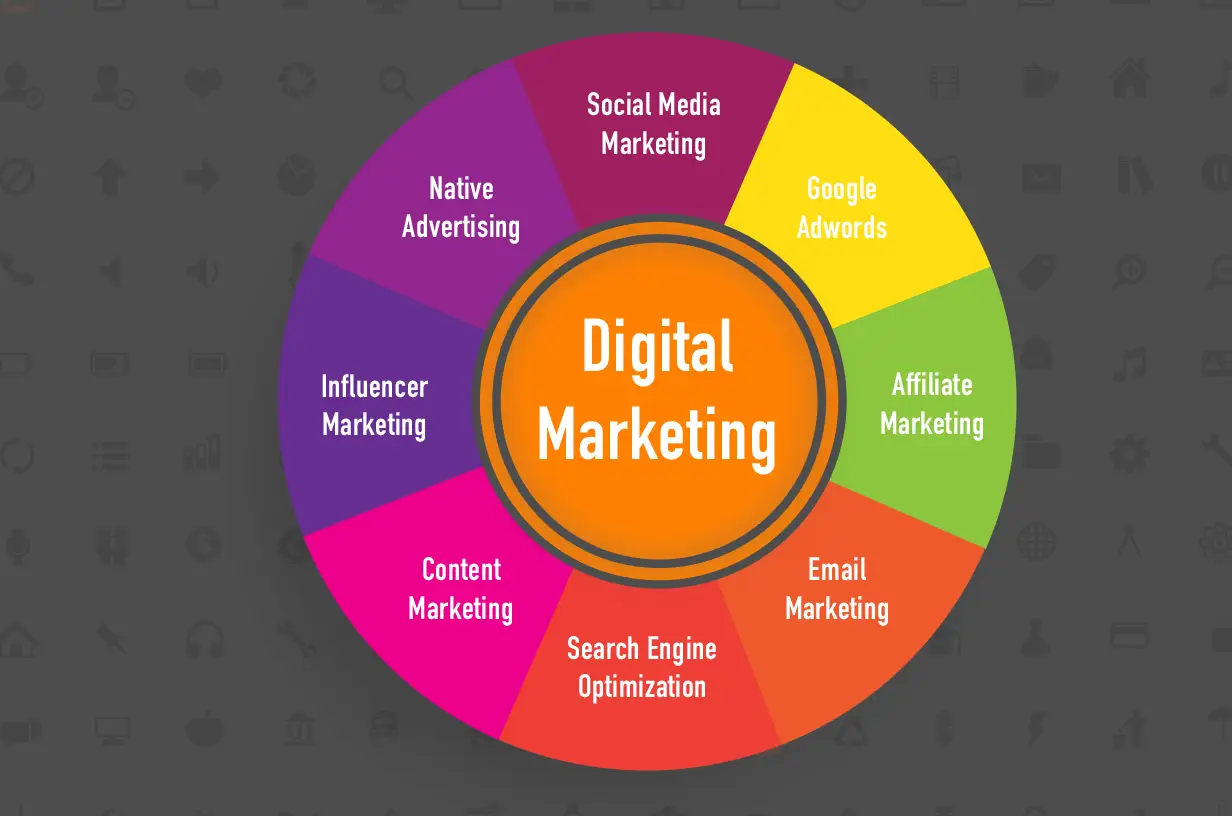
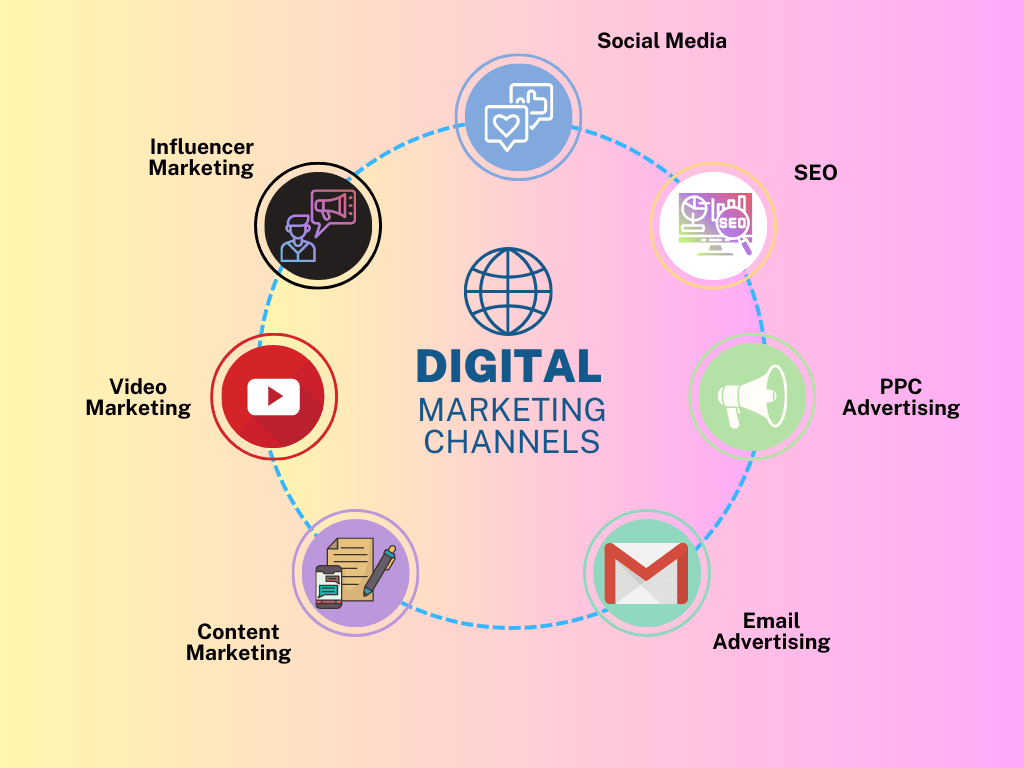
Some of the most commonly used digital marketing channels include:
- Search Engine Optimization (SEO)
- Social Media Marketing
- Content Marketing
- Google Ads (PPC)
- Email Marketing
- Video Marketing
- Influencer Marketing
- Affiliate Marketing
- Google Business Profile
- Online PR
Every channel has its own strengths, and the best results often come from selecting the channels that align with your business objectives. Before selecting the best marketing channels, it’s helpful to understand why digital marketing is important for every business, as each channel plays a unique role in achieving business growth.
Understanding the strengths of each platform is the first step to choose the right digital marketing channels for your business goals.
Why Choosing the Right Digital Marketing Channels Matters
Businesses that choose the right digital marketing channels are more likely to reach their ideal audience, improve return on investment, and achieve sustainable growth.Many businesses assume they need to be present on every digital platform to succeed. In reality, spreading resources too thin often leads to inconsistent marketing efforts and poor results.
Choosing the right digital marketing channels helps businesses:
- Reach the right audience.
- Improve marketing ROI.
- Increase lead quality.
- Build stronger customer relationships.
- Use marketing budgets more efficiently.
- Achieve measurable business goals.
Rather than following trends, businesses should evaluate which channels best match their products, services, and customer behavior.
A focused strategy often delivers better results than trying to manage every available platform.
7 Smart Ways to Choose the Right Digital Marketing Channels
Selecting the best marketing channels requires careful planning. The following strategies can help businesses make informed decisions and build a more effective digital marketing strategy.
1. Define Your Business Goals
The first step in choosing the right digital marketing channels is understanding what you want to achieve.
Different marketing goals require different channels.
For example:
- If your goal is increasing website traffic, SEO and content marketing may be the best options.
- If you want immediate leads, Google Ads may produce faster results.
- If your objective is building brand awareness, social media platforms can help reach larger audiences.
- If customer retention is your priority, email marketing can be highly effective.
Clearly defined goals make it easier to prioritize marketing activities and measure success.
Instead of asking, “Which channel is best?” ask, “Which channel best supports my business objective?”
One of the easiest ways to choose the right digital marketing channels is to start with clearly defined business objectives rather than following popular marketing trends.
2. Understand Your Target Audience
Successful marketing begins with understanding the people you’re trying to reach.
Businesses should identify:
- Age groups.
- Geographic location.
- Interests.
- Online behavior.
- Preferred platforms.
- Buying habits.
For example, younger audiences may spend more time on Instagram, while professionals often engage through LinkedIn. Local businesses may benefit significantly from Google Search and Google Business Profile, whereas B2B companies might generate more qualified leads through SEO and educational content.
The better you understand your audience, the easier it becomes to select the channels where they are most active.Understanding your audience is also an important part of building an effective digital marketing funnel, as different customers require different types of content throughout their buying journey.
3. Consider Your Marketing Budget
Budget plays a major role in selecting digital marketing channels.
Some channels require ongoing advertising spend, while others focus more on long-term investment.
For example:
| Channel | Investment Type |
|---|---|
| SEO | Long-term investment |
| Content Marketing | Long-term investment |
| Google Ads | Paid advertising |
| Social Media Ads | Paid advertising |
| Email Marketing | Low-cost relationship building |
Businesses with limited budgets often benefit from combining long-term strategies like SEO and content marketing with carefully targeted paid campaigns when necessary.
The goal is to maximize returns without overspending.
Your available budget also influences how you choose the right digital marketing channels, as some strategies require long-term investment while others deliver quicker results through paid campaigns.
4. Evaluate Your Industry and Competition
Not every marketing channel performs equally across industries.
A restaurant may receive significant traffic through Google Business Profile and Instagram, while a software company may generate more leads through SEO, webinars, and LinkedIn.
Studying competitors can also reveal useful insights.
Consider questions like:
- Which channels are competitors using successfully?
- Where do they receive the most customer engagement?
- Are there opportunities they have overlooked?
Competitor research should inspire ideas rather than encourage direct imitation. Every business should build a strategy based on its own goals and audience
5. Match Channels to the Customer Journey
Every customer goes through different stages before making a purchase. Choosing the right digital marketing channels becomes easier when you understand where your audience is in their buying journey.
For example:
- People who are just discovering your business often respond well to SEO, blog content, and social media.
- Customers comparing different options may find case studies, testimonials, and email marketing more helpful.
- Those ready to make a purchase may respond better to Google Ads, landing pages, or personalized offers.
Instead of expecting one channel to do everything, businesses should use different channels to support customers at different stages of their journey.
When your marketing channels align with customer needs, they create a smoother experience and increase the chances of conversion.
6. Test, Measure, and Optimize
Choosing the right digital marketing channels is not a one-time decision. Customer behavior, market trends, and business goals change over time, making regular evaluation essential.
Businesses should monitor key performance indicators (KPIs) such as:
- Website traffic
- Conversion rate
- Cost per lead
- Click-through rate (CTR)
- Return on investment (ROI)
- Customer engagement
- Bounce rate
Reviewing these metrics helps identify which channels perform well and which require improvement.
Instead of making assumptions, use data to guide future marketing decisions. Continuous testing and optimization can significantly improve marketing performance over time.
Regular analysis helps businesses choose the right digital marketing channels based on actual performance instead of assumptions.Businesses can use Google Analytics to monitor website traffic, user behavior, conversions, and other key performance indicators that support better marketing decisions.
7. Combine Multiple Channels for Better Results
No single marketing channel can achieve every business objective. While one channel may generate awareness, another may nurture leads, and another may encourage conversions.
For example:
- SEO helps people discover your website through organic search.
- Content marketing educates visitors and builds trust.
- Social media increases visibility and audience engagement.
- Email marketing keeps existing customers informed.
- Google Ads delivers immediate visibility for targeted searches.
Using these channels together creates a more consistent customer experience and strengthens your overall marketing strategy.
Rather than asking which channel is best, focus on building a combination that supports your business goals and complements your customers’ buying journey.
Common Mistakes to Avoid When Choosing Digital Marketing Channels
Many businesses struggle with digital marketing because they select channels based on trends instead of strategy.
Some common mistakes include:
- Trying to be active on every platform.
- Ignoring customer behavior and preferences.
- Focusing only on short-term results.
- Not setting clear marketing goals.
- Choosing channels without measuring performance.
- Copying competitors without understanding your own audience.
- Giving up before long-term strategies like SEO begin producing results.
Avoiding these mistakes helps businesses build a more focused and sustainable marketing strategy.
Real-Life Example
Imagine a local home interior design company that wants to increase enquiries.
Instead of investing in every marketing platform, the business selects channels based on its goals and audience.
- It uses SEO to improve visibility for people searching for interior design services.
- It publishes blog articles that answer common customer questions.
- It shares completed projects and design ideas on social media.
- It runs Google Ads for high-intent keywords to generate immediate enquiries.
- It sends email newsletters featuring design tips and recent projects to existing customers.
Each channel supports a different stage of the customer journey, helping the business attract new visitors, build trust, generate enquiries, and encourage repeat business.
Conclusion
Businesses that choose the right digital marketing channels can build stronger customer relationships, improve marketing efficiency, and achieve long-term success.Choosing the right digital marketing channels is not about using every available platform. It’s about selecting the channels that align with your business goals, target audience, budget, and customer journey.
By understanding your audience, setting clear objectives, evaluating available resources, and continuously measuring results, you can build a marketing strategy that delivers sustainable business growth.
Remember that digital marketing works best when different channels support one another. A thoughtful, data-driven approach allows businesses to maximize their marketing investment while providing a better experience for potential customers.
If you’re looking for a trusted digital marketing agency in Kannur, KLYQIN can help you identify the most effective digital marketing channels and develop a customized strategy that supports your long-term business goals.
Frequently Asked Questions
1. How do I choose the right digital marketing channels for my business?
Start by defining your business goals, understanding your target audience, evaluating your budget, analyzing your competitors, and measuring the performance of your marketing efforts.
2. Which digital marketing channel is best for small businesses?
There is no single best channel. The right choice depends on your business goals, target audience, industry, and available budget. Many small businesses benefit from combining SEO, content marketing, and local marketing strategies.
3. Should I invest in SEO or Google Ads first?
If you need immediate visibility, Google Ads can produce faster results. If your goal is long-term organic growth, SEO is a valuable investment. Many businesses achieve the best results by using both strategically.
4. Can I use multiple digital marketing channels together?
Yes. Combining multiple digital marketing channels creates a more consistent customer journey and helps businesses reach potential customers through different touchpoints.
5. How do I know if a marketing channel is working?
Track performance using key metrics such as website traffic, conversion rates, lead generation, click-through rates, and return on investment.
6. What factors should I consider before choosing a digital marketing channel?
Consider your business objectives, target audience, budget, competition, industry, customer journey, and the measurable results each channel can deliver.
If you’re unsure how to choose the right digital marketing channels for your business, KLYQIN can help you create a customized strategy based on your goals, audience, and budget.